
Love Holly’s story? Click here to meet more interns and read their stories!
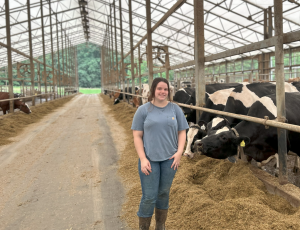
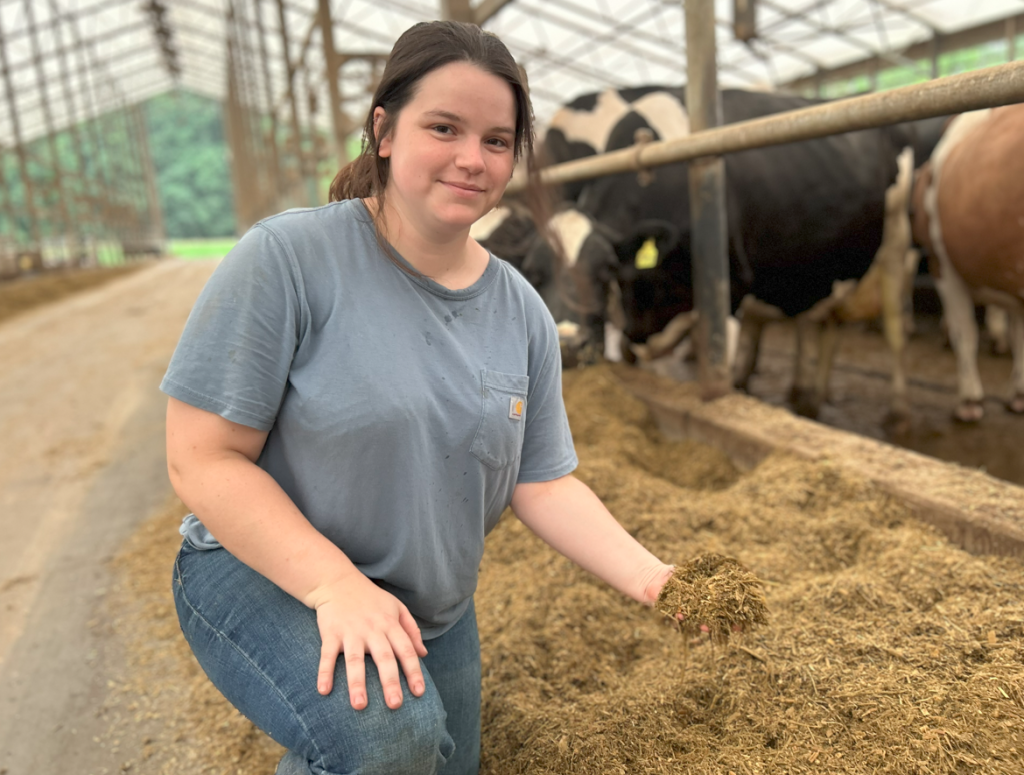
As an animal science major at West Virginia University with one semester to go, Holly Mahala decided to complete an On-Farm Internship to explore the dairy industry and consider whether she enjoys a farm-level role. Holly was paired with Vista Grande Farm in Berks County, Pennsylvania, which gave her a unique look at how to manage a herd with robotic milking technology.
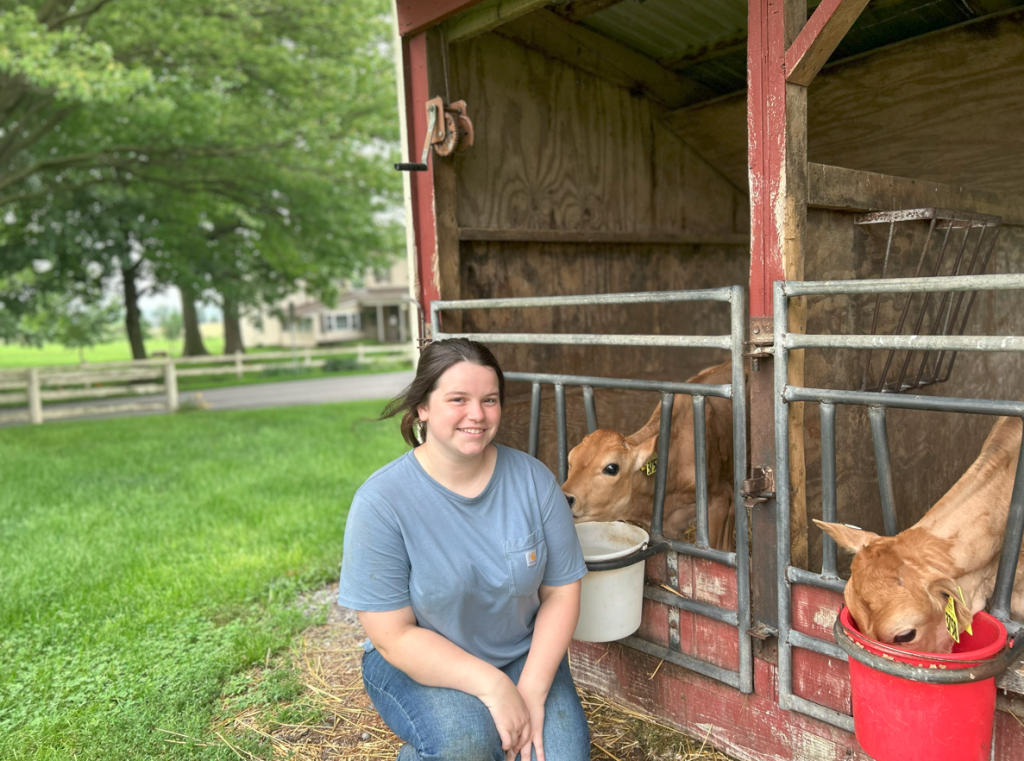
During the internship, her day-to-day responsibilities have included taking care of calves, helping in the robot barn to get bucket cows through, making the fetch list, getting the fetched cows, doing pregnancy management, and helping with treatments on the cows.
“My favorite part has been treating cows and doing IVs and mastitis treatments. I’ve had a little experience with this through my classes at school, but it’s always better to have a lot of consistent, hands-on experience to get better at it,” Holly explained.
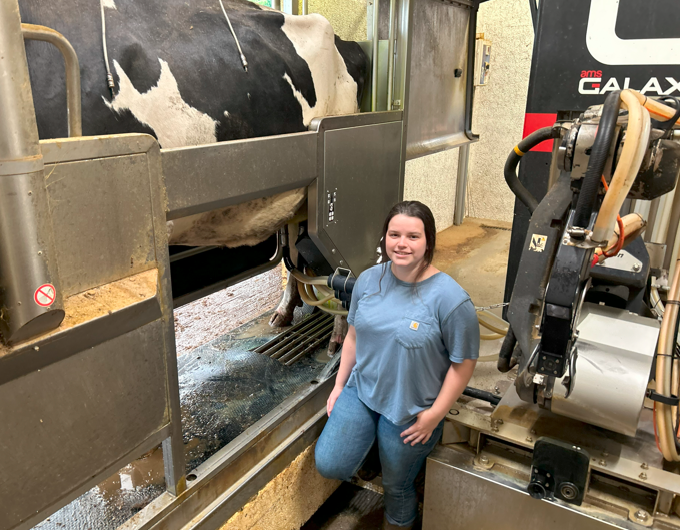
Gaining experience on a robotic dairy farm has also been a unique experience for Holly, as she learned how to troubleshoot problems with the robots and monitor the cows coming in to get milked at their own times.
“I’ve gotten a lot more familiar and comfortable with the robots, although it takes years to fully figure out the robots. I’ve learned some of the buttons and how to fix some of the problems if they have a shutdown,” she added. “I think everyone should have the opportunity to experience a robot farm and figure out how everything works, because it’s definitely different from any other type of dairy.”
Holly’s research project for the internship has been focused on helping the farm utilize the robots to their full potential. She worked with the farm’s nutritionist, Dr. Joe Bender, to install a time lapse camera and study the footage to find the average amount of free time in the robot system.
“My research project is focused on utilizing free time in the robot systems. I’m trying to figure out how many cows go in at each hour of the day and find the hours with the smallest average of cows going into the robots,” Holly explained. “The ultimate goal is to help the farm utilize the robots to their full potential instead of having sitting free time. Depending on the cow’s milking interval, some of them can go in almost three to four times a day if they wanted to. But a lot only go through about two times a day, so we want to get it to three or higher.”
For Holly, this internship experience helped shape her thoughts about her future career – and helped her determine her likes and dislikes.
“Even if you’re unsure about the internship, I would still tell another student to do it. You never know, you might end up liking it or maybe you’ll find out it’s not for you,” she said. “I’m hoping to go to grad school for animal nutrition and become some sort of animal nutritionist. And if that doesn’t happen, I would consider some type of farm management.”
—
The Dairy Excellence Foundation, the Professional Dairy Managers of Pennsylvania, and the Pennsylvania Dairymen’s Association provide $3,000 grants to support these on-farm internships each summer.