

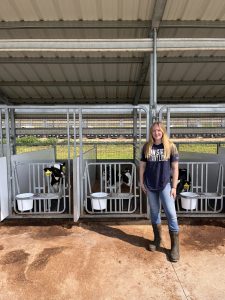
Love Emma’s story? Click here to meet more interns and read their stories!
Emma McLaughlin’s first experience working with dairy cattle began in high school. She grew up in 4-H and FFA, showing a large variety of livestock. Her neighbors had a dairy farm, and she eventually started showing cows with the family. Emma’s dairy experience continued when she began her college career at Penn State University and the living quarters at Penn State’s Dairy Barns had an opening.
“When I got to college, I decided to move into the dairy barns when they had an open spot. I realized I really loved the work,” she shares, reflecting on her experience living at the university’s dairy farm and working directly with the herd.
As an Animal Science major with a focus on dairy cattle, both farms that Emma has worked on throughout high school and college have felt like home and have made her very comfortable with dairy farming. So, her decision to apply for an On-Farm Internship this summer was rooted in a new challenge she made for herself: to be uncomfortable for a little while.
“I wanted [an experience] that was going to push me out of my comfort zone, and I had never been on a big dairy before. I knew I wanted to intern on a large-scale dairy farm,” she says. “I am definitely humbled by how much I didn’t know from working here, and that’s exactly what I wanted.”
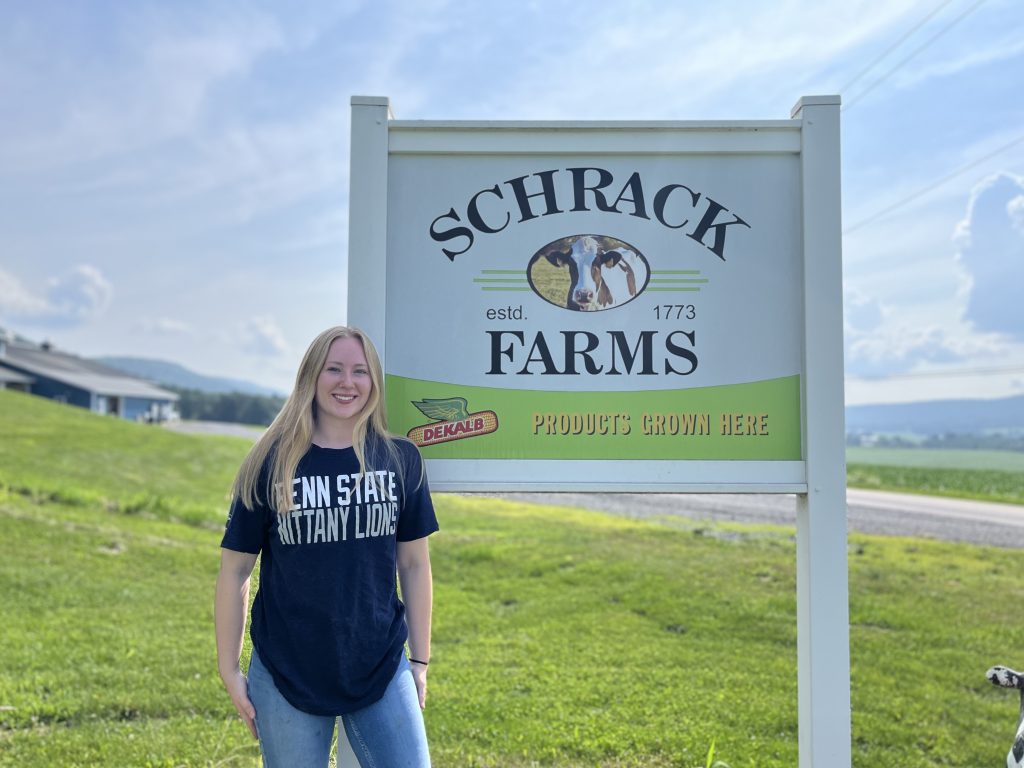
Emma was paired with Schrack Farms in Loganton, Pennsylvania. They milk 1,300 cows and she has been involved in multiple aspects of the operation throughout the summer. Emma functions as a herdsman assistant and helps with sorting cows for hoof trimming, herd checks with vaccine shots, and breeding. Emma is also using her time and resources during the internship to build on certain skills she will need in the future such as breeding cows.
“Fridays are breeding days. So that’s the big day for me because I’m trying to work on something that is a huge goal for me, which is to get better at breeding. I like Fridays, because it’s my challenge,” she adds.
One of the most exciting parts of the On-Farm Internship is the progress Emma has made. For the first couple weeks, Emma was out of her comfort zone. She was simply trying to learn how the farm operates and the general protocols they have in place. Slowly, she began to grasp a better understanding of what the farm was doing and how to be involved.
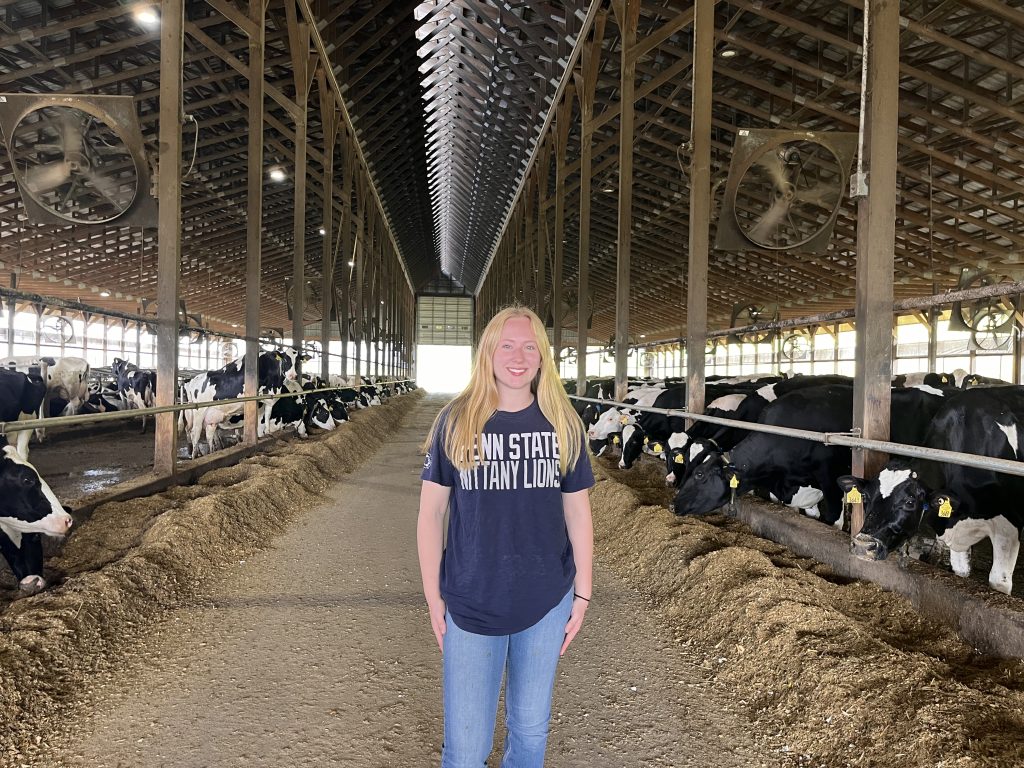
“I finally had this lightbulb moment where I knew what was going on and they could start to trust me to do things alone. I finally have some confidence in myself, and now it’s so much more enjoyable because I’m sure of myself,” she explains.
Each year, on-farm interns conduct a research project, helping them to dive deeper into various aspects of the dairy farm. The dry cow barn at Schrack Farms caught Emma’s attention, and with the farm’s potential for expansion, Emma analyzed the budgets and benefits that a new dry cow barn could offer the family. Emma is currently investigating potential changes to reduce overcrowding and a more modern facility.
“I want to see if, financially, a new facility is feasible and run some numbers to look at partial budgets,” Emma explains. “I’m looking to see if they could afford to build a new barn or renovate this one. Then, I plan to look at what the return on that would be if they had to expand or if they could do it right now where the herd is at.”
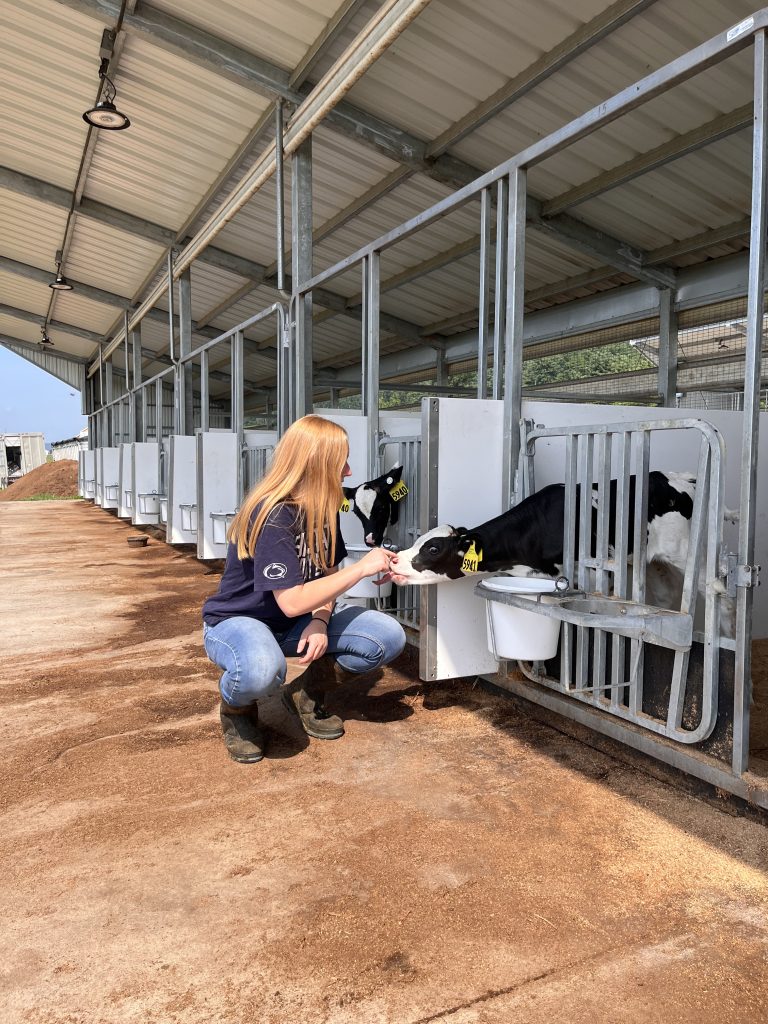
Thanks to the experience she is gaining this summer through the on-farm internship, Emma hopes to find a future position on a large dairy farm. After seeing both the rewarding work and the challenges of a larger farm, Emma believes this opportunity has truly prepared her for her future.
“A lot of whether or not you like your internship is how much you put into it. If you’re going to do this, do it with your whole heart. Take away as much as you can, and even if you don’t like it, any experience is a good experience,” Emma says. “I have really liked this. It has definitely changed my life for the better.”
—
The Dairy Excellence Foundation, the Professional Dairy Managers of Pennsylvania, and the Pennsylvania Dairymen’s Association provide $3,000 grants to support these on-farm internships each summer.